
The change of seasons from summer to fall always makes me think of one of my absolute favorite lessons for American Studies.
Full disclosure: This is a lesson idea I took from our AmStud district lead. But it’s such a good one that I have to share!
I love taking an inquiry-based approach to learning. One of my favorite strategies is launching with an experience that students can apply to an entire unit.
“Transcendentalist Day” is our AmStud launch into APUSH Period 4 (1800-1848). From an English teacher perspective, Period 4 is such an interesting time in literature and philosophy as the young United States begins forming a new identity for itself after the end of the Revolutionary War. Transcendentalist Day helps us build roots for Period 4 as well as the rest of the year, as we take time to connect with nature and think about the uniquely American philosophy that is Transcendentalism.

Our students end up loving this day because it gives them a break from the grind of being juniors in too-many AP classes and extracurriculars, allows them to actually think about the landscape around them, and gives them a low pressure exploration of important philosophical concepts that shape the American identity.
Added bonus: it’s a great lesson to show if you’re getting observed by administration! (As long as you are strong at classroom management and are comfortable with taking your kids outside.)
Here’s the lesson and how we do it!
Lesson: Transcendentalist Day
Duration: 90 minutes
Materials Required:
- This is an unplugged activity. Students will leave their devices in the classroom.
- Paper packet of readings – 1 for each student to keep and annotate. I created a packet using the CommonLit passages for:
- Excerpt from Walden “Where I Lived and What I Lived For” by Henry David Thoreau
- Excerpt from “Self Reliance” by Ralph Waldo Emerson
- Excerpt from “Nature” by Ralph Waldo Emerson
- “Because I Could Not Stop For Death” by Emily Dickinson
- “A Noiseless Patient Spider” by Walt Whitman
- Excerpts from “Song for Myself” by Walt Whitman
- Excerpt from “The Pond” by Henry David Thoreau
- Students may bring: a journal, sketchbook, writing utensils, drawing utensils, blanket to sit on, snacks

Lesson Outline
Learning Objectives: Students will read and reflect on transcendentalist texts. AP Lang teachers, you could pull language from any of the Reading skills in the CED — this can go with all of them based on how you conduct your discussion. APUSH teachers, this goes well with Skill 2 “Sourcing and Situation,” and Skill 5 “Making Connections.”

Before Going Outside: In Class Mini Lesson and Reflection (20-30min)
The kids are getting ready to be outside, in silence, without any devices or study materials to distract them. For our highly competitive and anxious crowd, that much time alone with one’s thoughts can bring about more anxiety. I usually start off with a journaling activity that I call “Unloading the Mental Load,” in which I guide students to dump out all the things that are on their mind constantly. It’s a coping strategy I have for myself when I get anxious, and it’s a good time to teach them this little way of taking care of themselves.
Afterwards, my history counterpart and I pair up to give a mini lesson on the Transcendentalists. It’s just a bare bones intro, nothing too in-depth–we can wait to do that later. Today, we prioritize our outside time and cut the lecture short. We only cover the broad ideas of individualism and connection to nature. I’ll show some American Romantic paintings to give visuals of how this philosophy came out in artwork. We will save those art pieces for deeper discussions in the following weeks.
Then, I introduce students to these principals of Transcendentalist Philosophy that I stole off an online source (I paraphrased it and put this lesson together so long ago that I can’t remember the source! If you know it, please leave a comment and I will correct myself). Students will write these sentences down in their journals:
- Truth comes from intuition and self-reflection rather than reason
- It is more important to work on self-improvement than improving others
- It is more important to ACT on your beliefs, rather than merely believing something
- Goodness comes from within, not from outside sources. (In fact, society and its institutions can corrupt our inner sense of right and wrong.)
- Solitude in nature can rejuvenate the mind and spirit.
They can have the option of journaling about any of these during our outside time. I explicitly state that in no way am I saying this is the right way of thinking–that this is A perspective, A way of thinking.
Students are encouraged to think critically by thinking of what challenged, enhanced, or confirmed their current thinking and why.
Students are also encouraged to find connections to American culture, and consider what is still true today.
The Transcendental Experience (50min)

This is an entirely unplugged activity. Students are asked to only take their Transcendentalist text packet, writing utensils, a spiral, and any food or water they want. They are told to not bring any other study material or books. Today is devoted to either be with their own thoughts or read Transcendentalist work.
Students get a printout of these instructions in case they forget what they are expected to do or think about.
We were lucky enough to be close to a nature trail. We asked permission from admin to walk our kids 7 minutes away from campus so we could feel like we “escaped” into the woods.
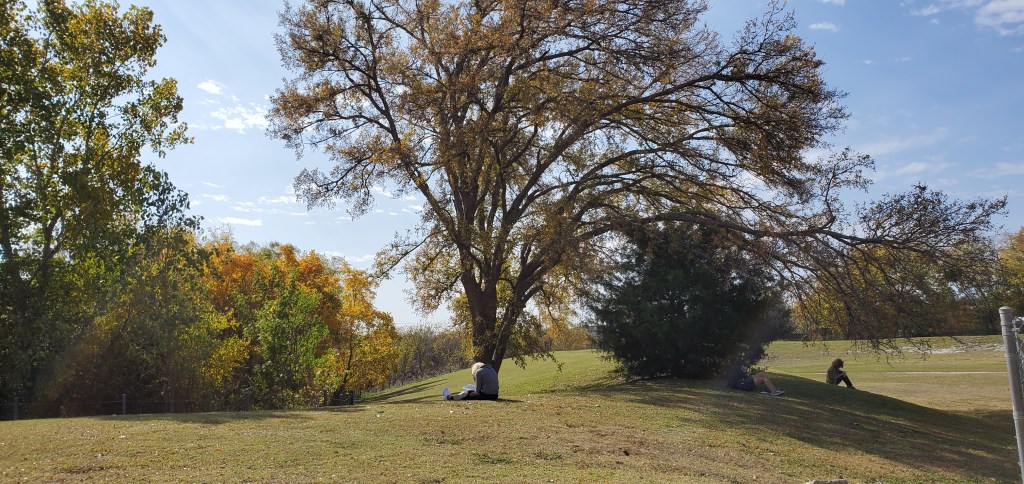
Our experience looked like this:
- 7 minutes to walk out
- 5 minutes to get everyone settled: Reminders that this is not a social event, so everyone must be spaced out. There will be no talking for at least 30 minutes.
- 30 minutes of silent reading/nature time. I instruct students to definitely read the excerpt from Walden and the excerpt from “Self Reliance” because they and their writers are important to American history and culture. The rest, they can read at their own pace. Once they have finished reading the required text, the rest of the time is their own to continue reading the texts in the packet, journal, draw, quietly enjoy nature, have a snack, or even have a cat nap.
- Closing Discussion outside (questions below)
- 7 minutes to walk back to class and get back into the school mindset
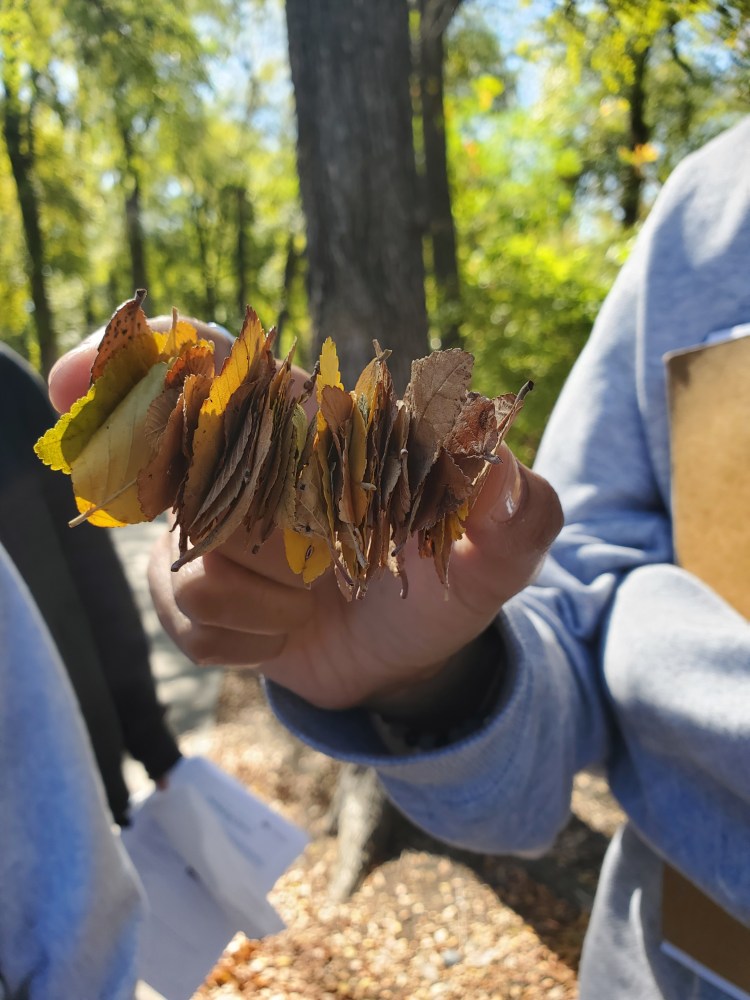
My coteacher and I also stick to the unplugged rules. We bring our phones for emergency reasons and to keep an eye on the time, but we put them off to the side so we can read and enjoy nature too. It’s also fun to observe the kids. We live in a suburb where a lot of people don’t take the time to be out in nature, especially AP kids their age. So you get to see them relax and turn into kids again as they draw out leaves in their journals or watch ants march. And someone always has an encounter with an arthropod that proves to be entertaining!
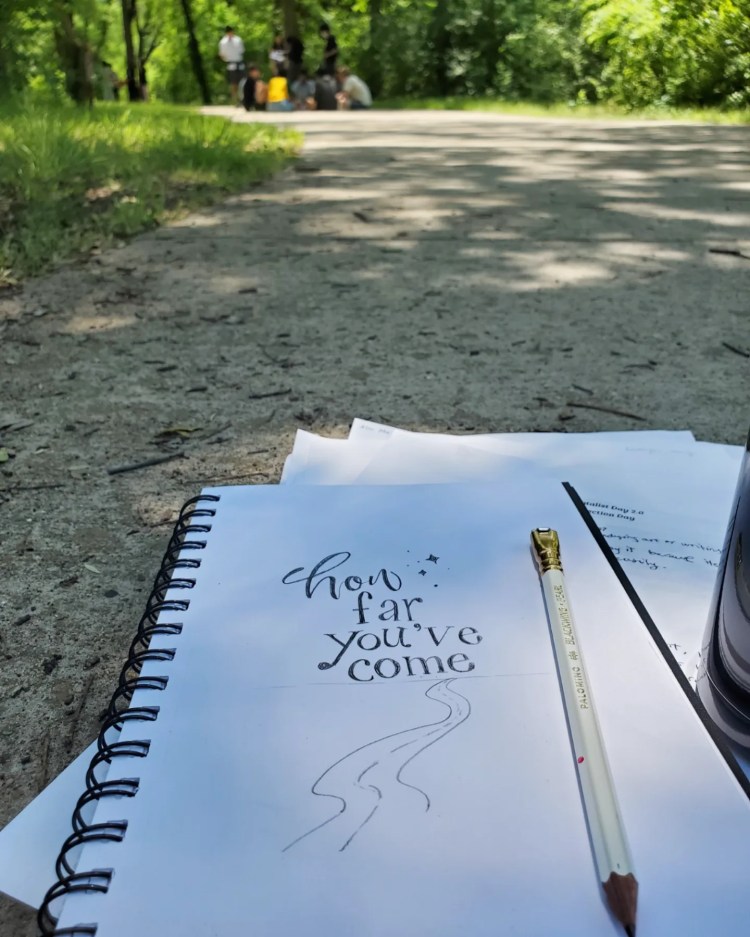
Closing Discussion Questions (15-20min)
We gather around in a circle and talk about our experiences. I usually bring up these questions:
- What was it like to be outside for this long? How many of you do go outside to enjoy nature like this on your own? Any interesting encounters with nature or observations today?
- What are some lines from your reading today that stood out to you? Why was it so meaningful?
- Did you see any lines that really connect with the way American culture is today? Where? How do you see it today?
- And I usually have my own text that I’ve marked up with quotes to piggyback off each student’s thoughts so that we can have a genuine conversation.
If we have extra time, I let them play for a few minutes before we go back. AP kids are so wound up that they forget to enjoy being kids sometimes.

Connection for Children of Immigrants
This may be something that I had the privilege of discussing with my students because of my own experience as a child of immigrants. I am not sure how this will translate for other teachers, so work with your comfort zone.
I was born and raised in Texas by Indian immigrants. I have always lived with a clash of cultures, and it has been a defining part of my identity. As a kid, it was a confusing part of my identity.
I like to share with my students that it took until my junior year of high school, when I read “Self Reliance,” for me to really put words to a huge conflict between my parents and me. My parents have always accused me of being too independent, and I couldn’t understand why that was a problem. When I read “Self Reliance,” I began to understand that my self reliance stemmed from my American identity. It took until college for me to learn about the different types of communities and cultures in the world, and of how many Asian cultures are collectivist. It was then that I understood that the reason my parents and I were having such a hard time understanding each other was because we were speaking from completely different philosophies on how the individual is placed within a society.
Because I am able to share this story, I feel comfortable opening up an opportunity for my students to reflect on their own cultural identity and values, and if they have experienced any tension from their multicultural backgrounds. Even for students whose family has been in the States for generations, this is a meaningful way to think about how our multifaceted identities impact how we interact with each other.
Where to Go From Here
On Day 2, we go straight into rhetorical analysis and argumentation mode with Civil Disobedience. Having our Transcendentalist Day gives a solid philosophical foundation to discuss Thoreau’s motivations and his belief that the individual is obligated to speak up against an unjust society.
For the APUSH portion of the class, we kept coming back to the philosophical concepts from this day as we moved forward in Period 4, and even connected it back to other periods as we progressed in the year. We
I loved this activity so much that I applied it to my AP Lang class as well. With them, we go from Transcendentalist Day, to Civil Disobedience, to MLK’s Letter From Birmingham Jail, to creating our own arguments/Q3 essays.
My first batch of GT AmStud kids appreciated this day so much that they begged to do it again all year long. So, if we can find a time to go outside, we will.
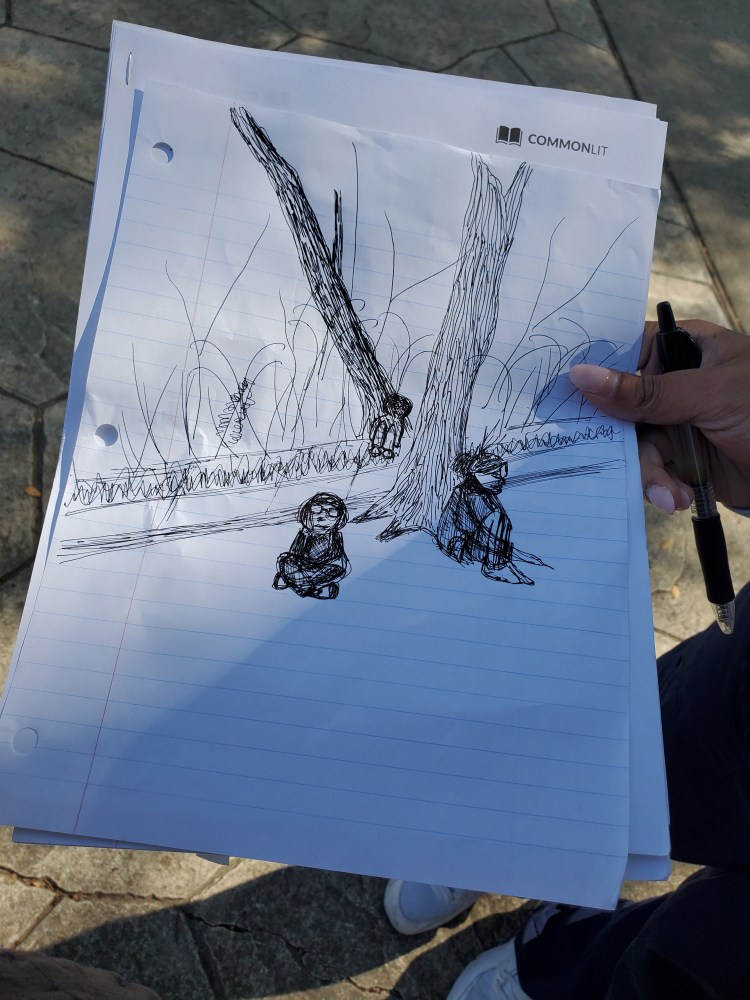
Extension Activity: Outdoor Art
The teacher who I stole this idea from makes this a two-day activity. One day is for reading the transcendentalists. The other day is to paint like the American Romantics. After a lesson on the Romantics and their painting style, they take watercolors outside and have time to create a piece.
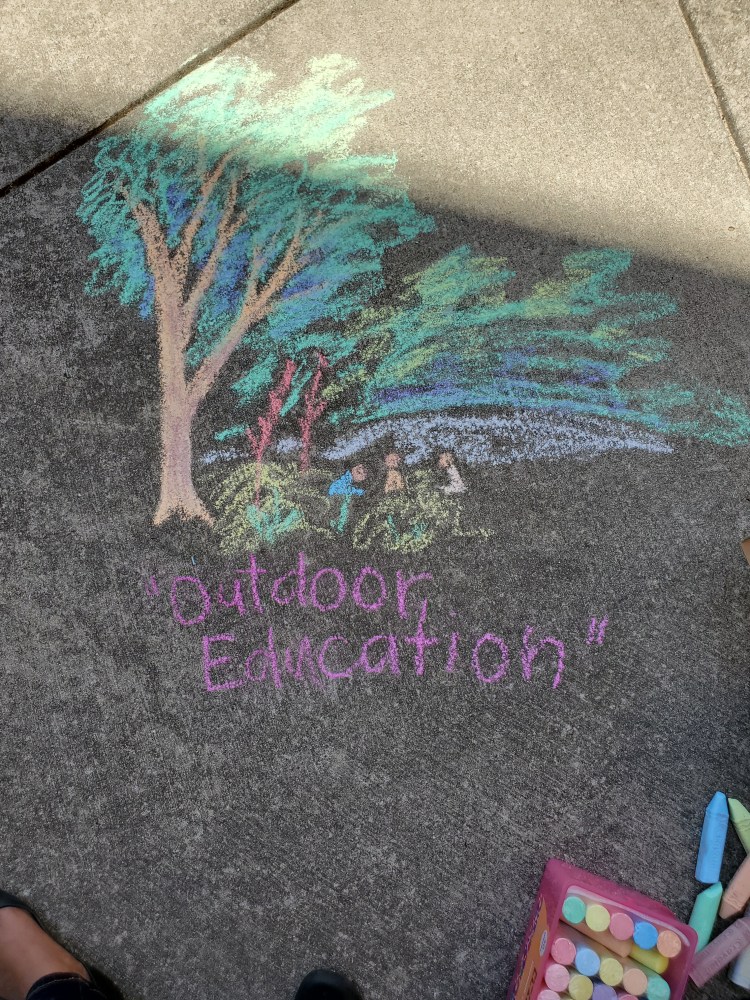
Because I only heard about this second activity at the end of the year, our team decided to make this an art lesson review: We looked back on all the major art movements that we studied over the year. Then, we challenged them to create a piece of their own that captures one of those movements, and explain how they did so. We provided watercolors, paper, chalk, and basic classroom art supplies, and we invited students to bring their own supplies if they preferred their fancier AP Art Student tools.
I have also done a photography mini-challenge with this activity. I gave a quick lesson on the rule of thirds in art, and then challenged students to take a photograph that embodies a line from their reading. This ended up being such a great quick activity!

Enjoy the Outdoors with Your Students!
This is one of those activities that makes me feel like I’m giving back to society and making the world a better place–WITHOUT triggering someone’s political sensors. Our kids in the ‘burbs don’t take time to pause and enjoy nature often enough, and this gives us room to have conversations about the nature that is available to us, how our cities are developed, and how meaningful it can be to get away from our long to-do list once in a while.
Yes, allergies are a thing, and walking too far away from campus makes safety a concern. That’s why I’ll always communicate with parents, admin, and students way ahead of time to make sure everyone takes their allergy meds and everyone is OK with going outside for a class period.
In the four years that I have practiced this lesson, I have not encountered any problems and have had lots of praise and appreciation from parents, admin, and students for this experience. I hope you’re able to enjoy the outdoors with your kids too!

 NLD x Swapna